Introduction: Choosing the Right Fibre Channel Switch for Modern SAN Environments
As enterprise data continues to grow, storage infrastructure needs to provide faster access, higher reliability, and better scalability. Many enterprise applications, including virtual machines, databases, and analytics systems, rely on fast and reliable access to shared storage.
A Fibre Channel Switch is a key component in a Storage Area Network (SAN), connecting servers and storage systems through a dedicated high-speed network. Designed for SAN environments, Fibre Channel switches provide dedicated storage connectivity with stable performance and low latency.
However, finding a suitable enterprise-grade SAN switch can be quite challenging, especially when considering requirements for performance, scalability, and compatibility. IT teams need to consider several factors, including Fibre Channel speed, port requirements, scalability, management features, security, and compatibility with modern storage technologies such as NVMe and all-flash arrays.
This guide outlines key factors to consider when purchasing 32Gb/64Gb Fibre Channel switches and explains how solutions such as the Brocade BR-G730-48-32G-R support SAN upgrades in modern data centers.
What Should You Consider Before Buying a Fibre Channel Switch?
Choosing a Fibre Channel switch requires more than meeting current performance requirements. Enterprises should also consider scalability, expansion options, and long-term storage needs.Several factors should be considered before selecting an enterprise SAN switch.
- Fibre Channel speed and available bandwidth
- Port requirements and future expansion options
- Switching latency for demanding workloads
- Compatibility with NVMe and Flash Storage Systems
- SAN management and monitoring capabilities
- Reliability and security capabilities
1. Choose the Right Fibre Channel Speed: 32Gb or 64Gb?
One of the first decisions when purchasing an enterprise Fibre Channel switch is selecting the appropriate port speed.
Existing SAN infrastructures may include multiple Fibre Channel speeds, ranging from 8Gbps to 32Gbps. However, as storage workloads become larger and more demanding, enterprises are increasingly looking toward higher-speed solutions.
32Gb Fibre Channel Switch for Existing SAN Environments
A 32Gb Fibre Channel Switch provides high-performance connectivity for many enterprise storage deployments.
It is suitable for organizations that need:
- Reliable SAN connectivity
- Improved storage bandwidth
- For Virtualized and Database Environments
- A balance between performance and infrastructure investment
For SAN upgrades, 32Gb Fibre Channel offers a balance of performance and compatibility.
64Gb Fibre Channel Switch for Future Storage Requirements
A 64Gb Fibre Channel Switch is suitable for storage environments where higher bandwidth and faster data access are required.
It is especially suitable for:
- NVMe storage environments
- All-flash storage systems
- Data-intensive applications
- Future SAN expansion
Enterprises upgrading their SAN infrastructure can choose 64Gb Gen7 Fibre Channel for higher performance and easier future expansion.
2. Evaluate Port Density and Scalability
Port capacity is another factor that enterprises need to consider when choosing a SAN switch.
A high-density Fibre Channel switch allows enterprises to connect more storage devices while using rack space more efficiently.
Before purchasing, IT teams should evaluate:
- Required number of Fibre Channel ports
- Expected future expansion
- Rack space availability
- Cabling requirements
Scalability gives enterprises the flexibility to add ports and capacity when needed instead of replacing the switch.
3. Consider Latency Performance for Critical Applications
For many enterprise applications, storage response time is a key performance factor.
Workloads such as:
- Enterprise databases
- Real-time analytics
- Virtualized environments
- High-performance computing
require efficient communication between servers and storage systems.
A Fibre Channel switch with low switching latency can help improve application responsiveness and provide more consistent storage performance. Latency, bandwidth, and scalability all affect SAN switch performance.
4. Support for NVMe and All-Flash Storage
As more data centers adopt NVMe storage and all-flash arrays, SAN infrastructure needs to deliver higher bandwidth, lower latency, and better scalability to support modern workloads.
An NVMe-optimized Fibre Channel switch can help organizations:
- Improve storage performance
- Support modern flash-based systems
- Reduce storage communication delays
- Build future-ready SAN infrastructure
5. Management, Security, and Reliability Features
Enterprise SAN environments require stable operation and efficient management.
When evaluating a Fibre Channel switch, organizations should consider:
- SAN management tools
- Security controls
- Redundant components
- Firmware upgrade options
- Operational simplicity
These management options give administrators more flexibility in monitoring and maintaining the SAN environment.
Why Brocade BR-G730-48-32G-R Is Suitable for Enterprise SAN Upgrades
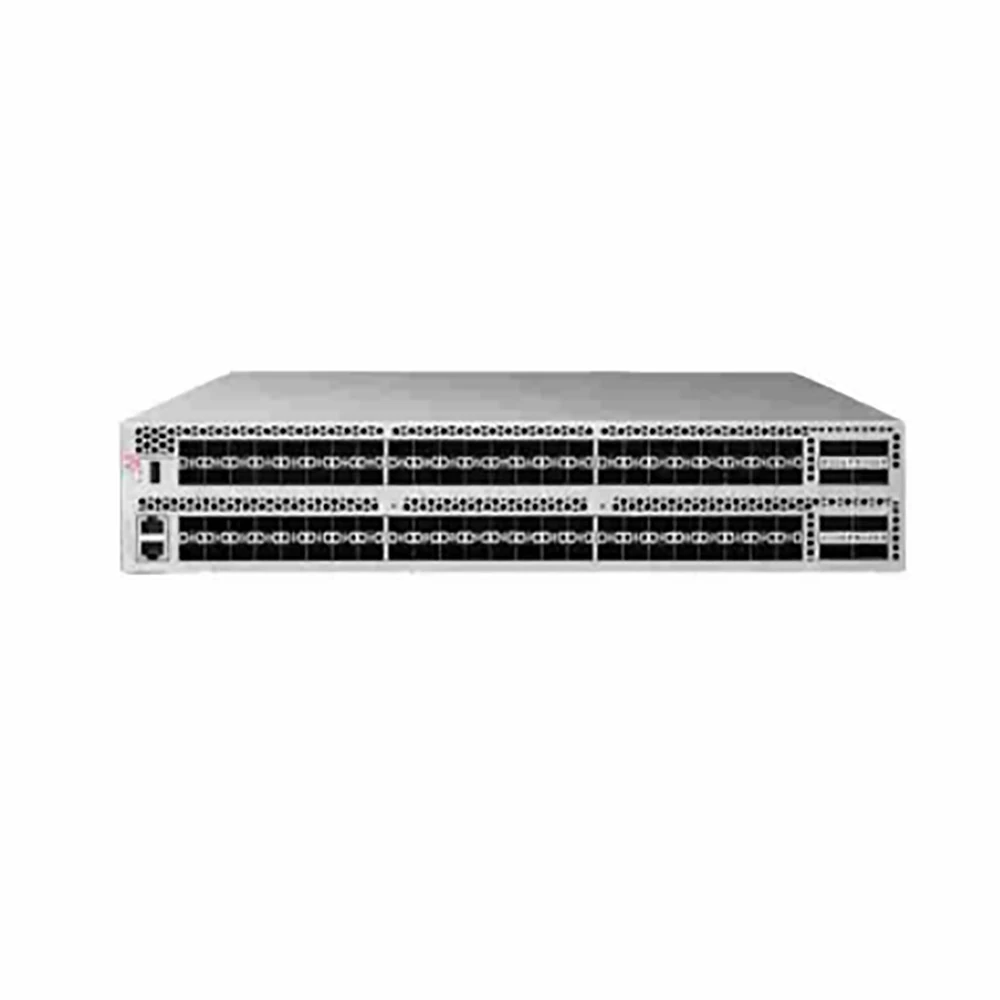
High-Density 32Gb Fibre Channel Connectivity
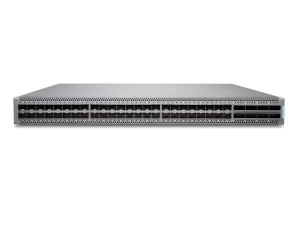
The Brocade BR-G730-48-32G-R data center switch supports:
- 48x 32Gbps SFP+ active ports
- 16x 2x64G SFP-DD ports
- 8/16/32/64Gbps Fibre Channel auto-sensing
The 2U design helps save rack space while supporting flexible SAN deployments. These Fibre Channel ports support compatible SFP modules and SFP+ transceivers, giving enterprises more options for SAN connectivity.
Optimized for NVMe and Flash Storage Environments
The BR-G730-48-32G-R provides approximately 460ns switching latency including FEC, supporting performance-sensitive storage applications.
With optimization for:
- NVMe over Fibre Channel (NVMe-oF)
- All-flash storage environments
the switch helps organizations improve storage network performance for demanding workloads such as analytics, databases, and enterprise applications.
Flexible Expansion from 48 to 128 Ports
Enterprise storage requirements can change over time. The BR-G730-48-32G-R can be expanded through Ports on Demand (PoD) licenses as SAN requirements grow.
Organizations can scale from:
- 48 ports
- Up to 128 ports
through step-by-step port activation, giving enterprises the flexibility to expand capacity as their SAN needs increase.
Simplified SAN Management with Fabric OS 9.x
The BR-G730-48-32G-R operates with Brocade Fabric OS (FOS) 9.x and supports autonomous SAN management capabilities, including:
- Self-learning
- Self-optimizing
- Self-healing
Management options include:
- Brocade SANnav Management Portal
- CLI
- REST API
- SNMP
These features help simplify daily SAN management and reduce operational complexity.
Enterprise Reliability and Security
Enterprise SAN deployments require reliable hardware and effective security controls.
The BR-G730-48-32G-R includes:
- Dual hot-swappable redundant 969W power supplies
- Hot-swappable fan modules
- Non-disruptive firmware upgrades
- FIPS 140-2 compliance
- Role-based access control (RBAC)
- Port isolation
These features help maintain reliable SAN operations and protect storage traffic.
Common Applications of Enterprise Fibre Channel Switches
Data Centers and Hybrid Cloud Infrastructure
Enterprise Fibre Channel switches provide reliable storage connectivity for modern data centers supporting growing data requirements.
Virtualization Platforms
Virtualized environments require consistent storage access. Fibre Channel switches provide the bandwidth and reliability needed for large-scale virtual machine deployments.
Big Data and High-Performance Computing
Analytics and HPC workloads require efficient data movement. High-speed Fibre Channel connectivity helps support demanding storage applications.
Mission-Critical Enterprise Systems
Industries requiring reliable storage access, such as financial services, healthcare, and enterprise systems, depend on stable SAN infrastructure.
About CREA DAS TECH LIMITED
CREA DAS TECH LIMITED is a global supplier of enterprise network and data center hardware, specializing in high-performance solutions from leading technology brands such as Brocade, Cisco, NVIDIA, Mellanox, Dell, HPE, Huawei, and Juniper.
With extensive experience in sourcing and distributing networking and storage infrastructure equipment, we help enterprises, system integrators, and data center partners find reliable hardware solutions for their IT environments. We specialize in enterprise networking and storage hardware, including Brocade Fibre Channel switches, current-generation solutions, and EOL equipment that can be difficult to source.
Whether you need a Brocade BR-G730-48-32G-R or other enterprise networking hardware, CREA DAS TECH supports customers with product sourcing, technical information, and procurement solutions.
Conclusion
A SAN upgrade should start with a clear understanding of current storage needs and expected growth. Factors such as port speed, scalability, latency, NVMe compatibility, management, and reliability should be considered before upgrading a SAN environment.
For SAN upgrades, the Brocade BR-G730-48-32G-R offers the bandwidth, scalability, and storage compatibility required by today’s enterprise environments. For Brocade switch sourcing, specifications, or SAN upgrade requirements, CREA DAS TECH provides professional hardware support and procurement solutions.
Frequently Asked Questions
1. How do I choose between a 32Gb and 64Gb Fibre Channel switch?
Enterprises should assess their SAN environment before choosing between 32Gb and 64Gb Fibre Channel. 32Gb suits many existing deployments, while 64Gb Gen7 supports newer storage platforms.
2. Is the Brocade BR-G730-48-32G-R suitable for NVMe storage environments?
Yes. With support for NVMe-oF and all-flash storage systems, the BR-G730-48-32G-R helps enterprises achieve faster storage access with low switching latency.
3. Can the Brocade BR-G730-48-32G-R support future SAN expansion?
Yes. With Ports on Demand (PoD) licenses, the BR-G730-48-32G-R can expand from 48 to 128 ports, giving enterprises the flexibility to increase SAN capacity when needed.