Key Takeaways
- A wireless AP for harsh outdoor environments should match the installation conditions and network requirements.
- Outdoor conditions can affect the protection, reliability, and configuration required from an AP.
- The AP should also fit the site’s wireless needs and existing network infrastructure.
- Final selection should be based on the actual application rather than a single specification.
Introduction
Choosing the right wireless AP for a harsh outdoor environment requires more than checking wireless performance. The AP must suit the conditions of the installation site while meeting the network requirements of the deployment.
A suitable choice can help maintain reliable wireless connectivity when outdoor conditions are more demanding than those in typical indoor environments.
What Makes an Outdoor Environment Harsh for a Wireless AP?
The main environmental factors to consider are temperature, moisture, sunlight, corrosion, and physical stress.
Temperature and Humidity
Temperature and humidity are basic environmental conditions that can affect an AP’s outdoor operation.
Equipment installed outside may experience larger temperature changes than indoor equipment, especially when it is exposed to direct sunlight or cold weather.
High humidity can also become a concern when temperature changes cause condensation. Buyers should compare the expected site conditions with the manufacturer’s specified operating temperature and humidity range before making a selection.
Rain, Dust, and Water Exposure
Rain, dust, and water can affect how much protection an outdoor AP needs. An AP under a roof may face different conditions from one installed on an open rooftop or in an industrial area.
The IP rating can help buyers compare this protection. According to the International Electrotechnical Commission (IEC), IEC 60529 defines IP ratings based on protection against dust and water. This gives buyers a simple way to compare how well different APs can handle outdoor conditions.
When choosing an outdoor AP, buyers should check the IP rating based on where the AP will be installed.
Sunlight, Corrosion, and Physical Stress
Some sites present risks that are not covered by temperature and water exposure alone. Direct sunlight can increase equipment temperature, while coastal or industrial locations may create corrosion risks.
Strong wind, vibration, and icing can also affect equipment installed in exposed locations. These conditions are especially relevant to industrial facilities, coastal sites, rooftops, and other areas with limited protection from the surrounding environment.
What Should You Look for in a Wireless AP for Harsh Outdoor Conditions?
The main factors include environmental protection, antenna flexibility, wireless capacity, and coverage requirements.
Check the AP’s Outdoor Protection
The AP’s environmental specifications should match the actual installation conditions. Buyers should compare the expected site conditions with the manufacturer’s specifications to ensure the AP can operate reliably in its intended environment.
The goal is not to choose the AP with the highest protection rating in every case. Instead, the selected model should provide protection that fits the conditions it will actually face.
Consider the Antenna Configuration
A flexible antenna configuration can be useful when outdoor coverage needs to follow a particular direction or site layout. This may apply to production areas, roads, walkways, storage yards, or other locations with defined coverage zones.
An external antenna can give network planners more flexibility when positioning the AP and designing coverage. The antenna configuration should be evaluated together with the installation position and required coverage pattern.
Check Wireless Capacity and Coverage
Wireless capacity should match the number of connected devices and the way the network will be used. A large outdoor area does not necessarily need an AP with the highest capacity. A smaller area may need higher capacity if many devices are expected to connect at the same time.
For sites with many connected devices, Wi-Fi 6 can be a suitable option. According to the Wi-Fi Alliance, Wi-Fi CERTIFIED 6 includes technologies such as OFDMA and uplink MU-MIMO to support multiple connected devices.
Coverage should be planned according to the site layout, device density, and application requirements. Distance alone does not determine whether an AP can provide suitable coverage.
How Can You Ensure the AP Matches the Existing Network in Harsh Outdoor Environments?
The AP should work well with the network already in place. Buyers should check the network connection, power supply, and Wi-Fi standard before choosing an outdoor AP. This is especially important when the AP needs to connect to an existing wireless access network.
Is the Uplink Speed Sufficient?
The AP needs a suitable network connection to deliver its full performance.
For example, a 1 Gbps connection may be enough for some applications, while sites with higher traffic may need a faster connection. The network switch and cable should also support the required speed.
Before choosing an AP, buyers should check the existing switch and its available ports. This can help prevent the network connection from limiting the AP’s performance.
Can the Network Provide Enough PoE?
The network should provide enough power for the AP to operate as expected.
Power over Ethernet (PoE) allows one network cable to carry both data and power, which can make outdoor installation easier. Different APs may need different amounts of power.
Buyers should check whether the existing switch can provide enough PoE power for the selected AP. If not, another power option may be needed.
Does the AP Support the Required Wi-Fi Standard?
The AP should support the Wi-Fi standard required by the existing network and connected devices.
Wi-Fi 6 can be a good choice for networks that need to support many connected devices. Buyers should also check the existing devices, network connection, and power supply to make sure everything can work together.
A suitable AP should not only provide good wireless performance but also fit the existing wireless network.
Is the C9124AXE Suitable for Harsh Outdoor Environments?
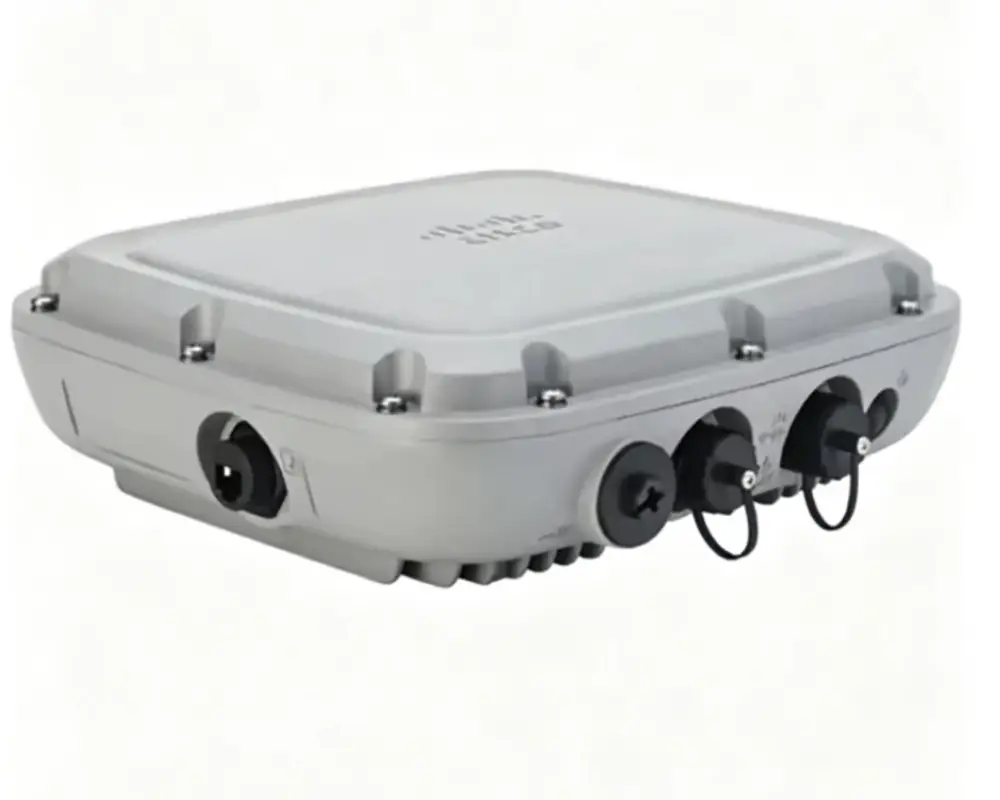
Based on the selection factors above, the Cisco Catalyst C9124AXE combines outdoor environmental protection, external antenna flexibility, and high-speed network connectivity for demanding outdoor deployments.
| Feature | C9124AXE |
| Wi-Fi standard | Wi-Fi 6 |
| Antenna | External antenna |
| Uplink | Up to 2.5 Gbps |
| Outdoor protection | IP66/IP67 |
| Power options | PoE / PoE+ / PoE++ / UPOE / DC |
Built for Demanding Outdoor Conditions
The C9124AXE is designed for outdoor locations where temperature, moisture, and other environmental conditions can be challenging. Cisco specifies IP66/IP67 protection for the Catalyst 9124AX Series, along with specifications covering humidity, wind, icing, corrosion, sunlight, and vibration.
Its specified operating temperature can range from -40°C to 65°C without solar loading, depending on the operating conditions.
These characteristics make the C9124AXE a practical option for outdoor business, industrial, and commercial deployments.
Flexible Antenna Design for Outdoor Coverage
The C9124AXE uses an external antenna design, which gives network planners more flexibility when outdoor coverage needs to follow a specific layout. Cisco specifies support for external antennas with gains of up to 13 dBi on the 2.4 GHz and 5 GHz bands.
This configuration can support outdoor areas where coverage needs to be planned around buildings, production areas, storage zones, or other physical layouts.
Fast Connectivity with Flexible Power Options
The C9124AXE provides up to 2.5 Gbps Multigigabit Ethernet and supports multiple power options, including 802.3af, 802.3at PoE+, 802.3bt PoE++, Cisco UPOE, and DC input.
This gives buyers more flexibility when integrating the AP with different network and power configurations, including deployments using a Cisco Catalyst switch.
Suitable for Industrial and Commercial Outdoor Sites
The C9124AXE can be considered for outdoor sites where environmental protection needs to be combined with enterprise wireless connectivity.
Potential applications include:
- Warehouses and distribution areas
- Manufacturing facilities
- University and business campuses
- Stadiums and outdoor venues
What Should You Confirm Before Ordering?
Before ordering, buyers should confirm that the selected AP configuration matches the installation environment, coverage needs, and existing network infrastructure. Mounting requirements and necessary accessories should also be confirmed in advance.
These details can be included in an RFQ to help confirm the required configuration before purchase.
Frequently Asked Questions About Wireless APs for Harsh Outdoor Environments
Can an Outdoor AP Be Installed Without a Protective Cover?
An outdoor AP may not need an additional cover if it is designed for exposed installation. Buyers should follow the manufacturer’s installation requirements for the selected model.
Where Should an Outdoor AP Be Installed?
An outdoor AP should be installed where it can provide the required coverage without unnecessary physical obstruction. The mounting location should also suit the site’s environmental conditions.
What Outdoor Applications Can the C9124AXE Support?
The C9124AXE can support outdoor applications such as warehouses, manufacturing facilities, campuses, and outdoor venues. The final configuration should match the needs of the specific site.
Can the C9124AXE Be Added to an Existing Network?
The C9124AXE can be integrated into an existing network when the available connection and power supply meet its requirements. The existing infrastructure should be checked before deployment.
What Makes the C9124AXE a Suitable Outdoor AP?
The C9124AXE combines outdoor protection, external antenna flexibility, and high-speed connectivity for demanding outdoor deployments. These features make it an option for sites that need both environmental protection and enterprise wireless connectivity.
Conclusion
Choosing the right wireless AP for a harsh outdoor environment starts with understanding the actual site and network requirements. Environmental conditions, wireless needs, and existing network infrastructure should be considered together.
For deployments that require outdoor protection and flexible network integration, the C9124AXE can be considered as one suitable option.
Before ordering, confirm the site conditions and network requirements to ensure that the selected configuration fits the deployment. If you need help selecting a suitable wireless AP for your outdoor network, feel free to contact us. We can provide a customized solution based on your application and network requirements.