1.What Is Cisco QSFP-100G-LR4-S Optical Module
The Cisco QSFP-100G-LR4-S is a 100G optical module for single-mode fiber. It plugs into a QSFP28 port and uses a standard duplex LC connector to transmit data at 100Gbps over distances up to 10 kilometers.
This module meets the IEEE 802.3 100GBASE-LR4 standard. It is built for high-bandwidth networks such as data center interconnect, enterprise core networks, and campus backbones. It is hot-pluggable, low power (3.5W max), and supports Digital Diagnostic Monitoring (DDM) for real-time performance tracking.
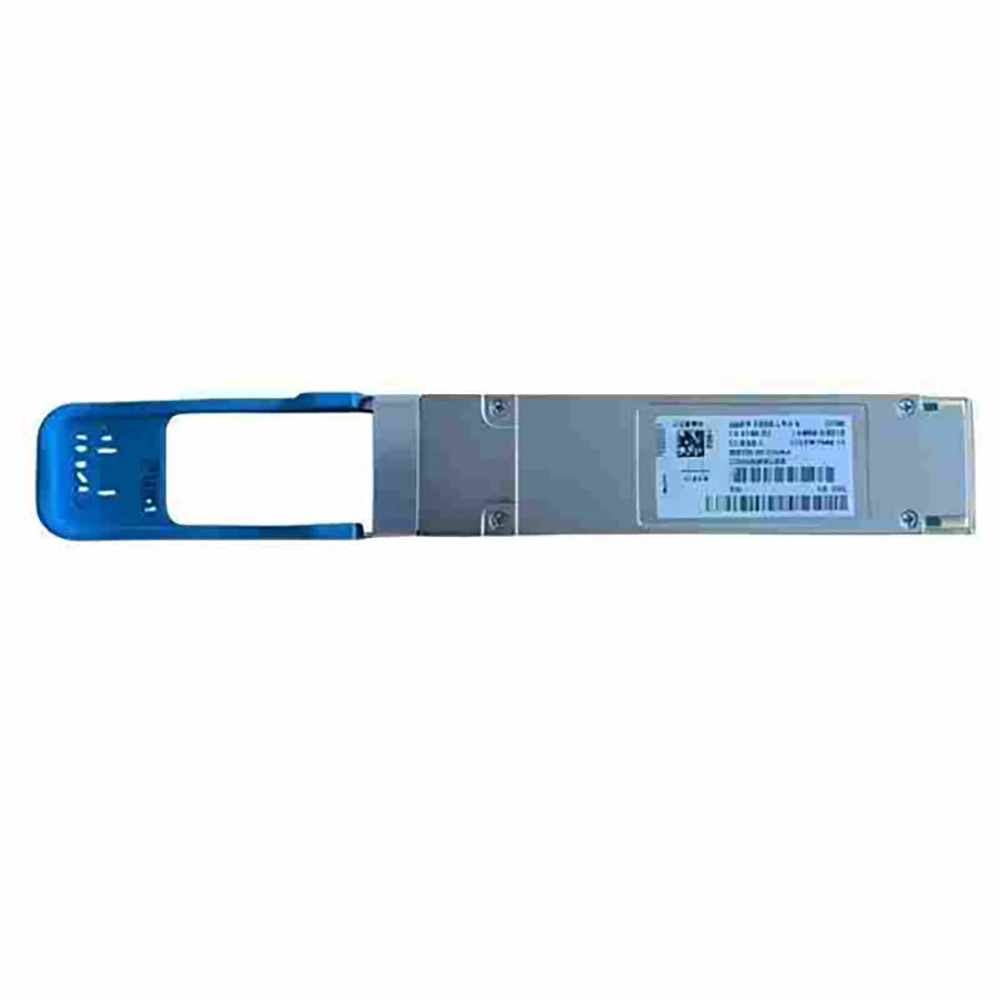
2.QSFP28 Form Factor and 100GBASE-LR4 Standard
The QSFP28 package is the industry standard for 100G optical modules, providing four channels, each with a rate of 25Gbps. The QSFP-100G-LR4-S complies with the MSA (Multiple Source Agreement) specification and is compliant with IEEE 802.3ba, SFF-8665, and SFF-8636 standards, thus ensuring broad interoperability with Cisco and other compatible network hardware.
3.How 4×25G LAN-WDM Wavelengths Enable 100G Transmission
The module uses four LAN WDM wavelengths:
1295.56nm
1300.05nm
1304.58nm
1309.14nm
Each wavelength carries a 25.78Gbps data stream, and together they deliver a total 100Gbps data rate. The QSFP-100G-LR4-S uses advanced 4×25Gbps EML transmitter and PIN receiver technology, ensuring stable signal transmission over standard G.652 single-mode fiber without complex signal regeneration.
4.Technical Specifications of Cisco QSFP-100G-LR4-S
| Parameter | Details |
| Part Number | QSFP-100G-LR4-S |
| Form Factor | QSFP28 MSA compliant |
| Data Rate | 100Gbps (4×25.78Gbps) |
| Standard | IEEE 802.3 100GBASE-LR4 |
| Wavelength | 1295.56nm, 1300.05nm, 1304.58nm, 1309.14nm |
| Transmission Distance | Up to 10km over G.652 SMF |
| Connector Type | Duplex LC/UPC |
| Transmitter Type | 4x LAN WDM EML |
| Receiver Type | PIN photodiode |
| TX Power | -4.3dBm to 4.5dBm |
| RX Sensitivity | ≤ -10.6dBm |
| Optical Power Budget | 6.3dB |
| Power Consumption | ≤ 3.5W |
| Operating Temperature | 0°C to 70°C (32°F to 158°F) |
| Power Supply | Single +3.3V |
| DDM Support | Yes (Digital Diagnostic Monitoring) |
| Compliance | RoHS, IEEE 802.3ba, ITU-T G.652, SFF-8665, SFF-8636 |
| Laser Class | Class 1 |
5.Key Features of Cisco QSFP-100G-LR4-S
- 100Gbps speed – Supports 100GBASE-LR4 Ethernet, suitable for data-intensive applications such as cloud computing, high-performance computing (HPC), and real-time analytics.
- 10km reach – It can operate on standard single-mode fiber (G.652), thus eliminating the need for expensive repeaters in mid-range links.
- Hot-pluggable – Install or replace without powering down the device, reducing downtime and simplifying maintenance.
- DDM monitoring –Real-time monitoring of optical power, temperature, voltage, and bias current enables proactive fault detection.
- Low power – The maximum power consumption is just 3.5W, helping to reduce energy costs.
- Cisco compatible – Fully interoperable with Cisco switches and routers, protecting existing infrastructure investments.
6.Why Cisco QSFP-100G-LR4-S Is Ideal for Data Center Interconnect (DCI)
6.1 Supporting High-Bandwidth Cloud and Enterprise Traffic
Cloud computing and digital transformation create huge traffic between data centers. The 100G QSFP28 transceiver delivers the 100G bandwidth needed to keep data replication, backup, and application performance running smoothly.
6.2 Enabling Reliable Long-Distance 100G Connectivity
With a 10km reach over single-mode fiber, this module connects data centers, campus buildings, or metro sites reliably — no amplifiers or signal regenerators needed. That saves both capital and operating costs for medium-haul 100G deployments.
6.3 Improving Scalability for Future Network Expansion
The QSFP28 form factor and 100GBASE-LR4 standard ensure that your network infrastructure is ready for future bandwidth growth. As 100G becomes the baseline for core and DCI networks, the QSFP-100G-LR4-S provides a future-proof investment that scales with your organization’s needs.
7. Application Scenarios
Based on official Cisco product documentation, the QSFP-100G-LR4-S is recommended for the following use cases:
- Data Center Interconnection (DCI): Connecting geographically dispersed data centers up to 10km apart with high-speed 100G links.
- Enterprise Core & Distribution Networks: Building high-bandwidth core layers for large enterprises, supporting mission-critical applications and user traffic.
- Campus Network Backbone: Establishing long-distance 100G connections between campus buildings and central network facilities.
- Service Provider Networks: Deploying 100G Ethernet links for metro and regional network deployments, delivering high-speed connectivity to customers.
- High-Performance Computing (HPC): Enabling fast data transfer between HPC clusters and storage systems, supporting compute-intensive workloads.
- Cloud Computing Infrastructure: Supporting the high-bandwidth requirements of cloud data centers, ensuring efficient resource allocation and user access.
8.Business Benefits of Using Cisco QSFP-100G-LR4-S
8.1 Lower Operational Costs in Data Center Networks
The low power consumption (≤3.5W) feature helps reduce energy costs in large-scale deployment scenarios. The hot-swappable design minimizes maintenance time and reduces labor costs. Furthermore, the 10-kilometer transmission distance eliminates the need for expensive signal repeaters or amplifiers in medium-distance links.
8.2 Scalable Architecture for Future 100G Upgrades
The QSFP-100G-LR4-S integrates seamlessly into existing Cisco infrastructures, protecting current investments while enabling a smooth migration path to 100G Ethernet. Organizations can deploy 100G links incrementally as bandwidth demands grow.
8.3 Reduced Maintenance with Hot-Swap Design
Hot-swappable capability means modules can be replaced without scheduling lengthy downtime windows, reducing both operational disruption and maintenance costs. This is particularly valuable in 24/7 data center environments where uptime is critical.
9.QSFP-100G-LR4-S vs Other 100G QSFP28 Modules
LR4 vs SR4: Distance and Fiber Type Differences
| Feature | QSFP-100G-LR4-S | QSFP-100G-SR4-S |
| Fiber Type | Single-mode (SMF) | Multi-mode (MMF) |
| Max Distance | 10km | 100m |
| Wavelength | 4x LAN-WDM (1295–1309nm) | 850nm |
| Connector Type | Duplex LC | MPO-12 |
| Typical Use | DCI, campus backbone, metro | Intra-data center, top-of-rack |
Choose LR4 when you need to cover distances beyond 500m up to 10km. Choose SR4 for short connections within the same data center hall.
10.When to Choose QSFP-100G-LR4-S Over Other Options
Choose the QSFP-100G-LR4-S when your deployment requires:
- 100G links over 2km to 10km on single-mode fiber
- Duplex LC cabling (not parallel MPO)
- Full compatibility with Cisco 100G switches and routers
- DCI, campus backbone, or metro Ethernet applications
11.Installation and Deployment Best Practices
11.1 Single-Mode Fiber Requirements (OS2 / G.652)
Use G.652D or G.657A1 OS2 single-mode fiber with duplex LC/UPC connectors. Cisco also recommends approved LC-LC single-mode patch cords — for example, those compatible with SFP-10G-LR modules — to ensure optimal signal integrity.
11.2 Best Practices for 100G Link Deployment
Follow these guidelines to ensure stable performance:
- Clean all fiber connectors before installation to avoid signal loss caused by dust or contamination.
- Verify optical power budget – The module provides a 6.3dB power budget. Ensure TX power (-4.3dBm to 4.5dBm) and RX sensitivity (≤ -10.6dBm) are within specifications.
- Monitor DDM data during initial deployment to confirm stable operation.
- Ensure bend radius compliance for SMF to avoid micro-bending losses that degrade signal quality.
11.3 Avoiding Signal Loss and Ensuring Stable Performance
- Use only G.652-compliant SMF for full 10km reach.
- Keep patch cords within recommended lengths.
- Regularly check DDM alarms for temperature or voltage deviations.
- Store spare modules in anti-static packaging to prevent ESD damage.
12.Conclusion
The Cisco QSFP-100G-LR4-S is a mature, reliable, and cost-effective 100G transceiver module for organizations building or scaling 100G Ethernet networks.
It offers a 10km reach over single-mode fiber, low 3.5W power consumption, DDM functionality, and wide Cisco compatibility. That’s why it remains a preferred choice for DCI, enterprise core and distribution networks, campus backbones, and service provider metro Ethernet.
Whether you’re upgrading from 10G/40G or deploying new 100G infrastructure, this module delivers the performance and reliability needed for modern high-bandwidth environments.
13.Frequently Asked Questions (FAQ)
Q: What fiber type is required for LR4 optical module?
A: It requires G.652 single-mode fiber (SMF), typically OS2 grade, with duplex LC/UPC connectors.
Q: What is the difference between QSFP-100G-LR4-S and SR4?
A: LR4 supports 10km over single-mode fiber, while SR4 supports 100m over multi-mode fiber. LR4 is used for DCI and campus backbones; SR4 is used for intra-data center connections.
Q: Is QSFP-100G-LR4-S hot-pluggable?
A: Yes, it features a hot-pluggable QSFP28 form factor, allowing installation and removal without powering off the host device.
Q: Does QSFP-100G-LR4-S support Digital Diagnostic Monitoring (DDM)?
A: Yes, it fully supports DDM, enabling real-time monitoring of optical power, temperature, voltage, and bias current.
Q: Can QSFP-100G-LR4-S be used in non-Cisco devices?
A: While designed for Cisco hardware, it is built to MSA standards. However, for full compatibility and support, Cisco recommends using it with certified Cisco networking equipment.