The rapid growth of AI, cloud computing, virtualization, and data-intensive applications is putting greater pressure on data center networks. Traditional 10GbE infrastructure may struggle to support the increasing traffic between servers, storage systems, and network devices. As a result, many enterprises are adopting 25GbE switches with 100GbE uplinks to improve server connectivity and network capacity. This article explains how this architecture works, its key benefits, and why solutions such as the Juniper QFX5120-48Y-AFO 25G switch are becoming an important choice for modern data center environments.
What Are 25GbE Switches with 100GbE Uplinks?
A 25GbE switch with 100GbE uplinks is designed to provide high-speed connectivity between servers and the wider data center network.
In a typical deployment:
- 25GbE ports connect servers, storage devices, and network equipment.
- 100GbE uplinks connect switches together and provide higher-capacity communication between network layers.
This design allows enterprises to increase server connectivity while preventing bottlenecks between switches.
Compared with traditional network upgrades that require replacing the entire architecture, 25GbE access combined with 100GbE uplinks provides a more flexible and scalable approach.
Understanding 25GbE Access Ports
Many data centers are moving from 10GbE to 25GbE as server traffic continues to increase. With higher server connection bandwidth, 25GbE access ports meet the demands of high-load applications while maintaining the ease of management characteristic of existing Ethernet environments.
By moving to 25GbE, enterprises can increase network capacity while maintaining a flexible Ethernet infrastructure for cloud, AI, and virtualization applications.
The Role of 100GbE Uplinks in Leaf-Spine Networks
Modern data centers often use a leaf-spine architecture to improve scalability and traffic efficiency.
In this design:
- Leaf switches connect directly to servers and storage devices.
- Spine switches provide the high-speed backbone connection between different parts of the network.
A Data center leaf switch with high-speed uplinks helps ensure that server traffic can move efficiently across the entire network. Meanwhile, the Spine switch layer provides additional bandwidth to support large-scale data exchange.
For businesses deploying AI and cloud applications, this architecture provides the connectivity needed for multiple servers to exchange data efficiently.
Key Benefits of 25GbE Switches with 100GbE Uplinks
Lower Network Latency for AI and HPC Workloads
Applications such as AI training, HPC, and real-time analytics require fast communication between multiple computing systems. When network response time increases, data processing efficiency can be affected.
With 25GbE access and 100GbE uplinks, enterprises can increase network capacity between servers and switches while supporting applications that require large amounts of data processing.
Better Scalability for Future Expansion
Data center networks need to adapt as businesses add more servers, applications, and services. A fixed network design may become difficult to expand when traffic demands increase.
With 25GbE access and 100GbE uplinks, enterprises can increase network capacity gradually while keeping their existing infrastructure in place.
Essential Features to Consider When Choosing a 25GbE Data Center Switch
Choosing a data center switch requires more than looking at connection speeds. When selecting a data center switch, enterprises need to look beyond bandwidth and consider factors such as reliability, scalability, and network management.
A Layer 3 switch should offer reliable routing, effective traffic management, and the flexibility to work with modern data center architectures.
High Port Density and Flexible Uplink Options
Port density is an important factor for modern data centers because rack space and operational efficiency are valuable resources.
For growing data centers, port density and uplink capacity are important factors when selecting a switch. More access ports allow additional servers to be connected, while higher-speed uplinks prevent bottlenecks between network layers.
Layer 3 Routing and EVPN-VXLAN Support
As data center networks expand, enterprises need better ways to control traffic between servers, applications, and network segments. Layer 3 switches provide advanced routing functions to improve network flexibility and simplify traffic management.
With EVPN-VXLAN support, enterprises can create more flexible network structures for cloud and virtualization applications.
Redundant Power Supplies and Efficient Cooling Design
Data center equipment needs to remain stable during continuous operation. Features such as redundant power supplies and hot-swappable components allow maintenance tasks to be completed with less impact on network availability.
High-density racks generate more heat, making airflow design an important part of switch deployment. Front-to-back airflow helps maintain proper cooling when multiple devices are installed in the same rack.
Network Automation and Simplified Management
As data center networks grow, managing devices manually can become more complex. Automation features and centralized management tools help IT teams simplify configuration, monitoring, and daily operations.
Modern switches with features such as Juniper Mist AI, REST API, and ZTP help simplify network configuration and daily management while supporting larger-scale deployments.
A Practical Example: Juniper QFX5120-48Y-AFO
The Juniper QFX5120-48Y-AFO is a high-density Layer 3 data center switch designed for modern cloud data centers, spine-leaf networks, and enterprise aggregation environments.
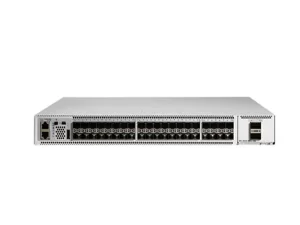
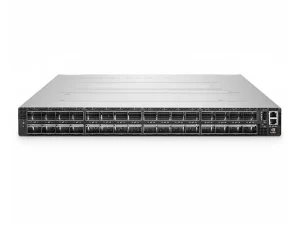
It combines 48 SFP28 ports supporting 1/10/25GbE connectivity with 8 QSFP28 ports supporting 40/100GbE uplinks. This design makes it suitable for organizations that need high-speed server access combined with scalable network connectivity.
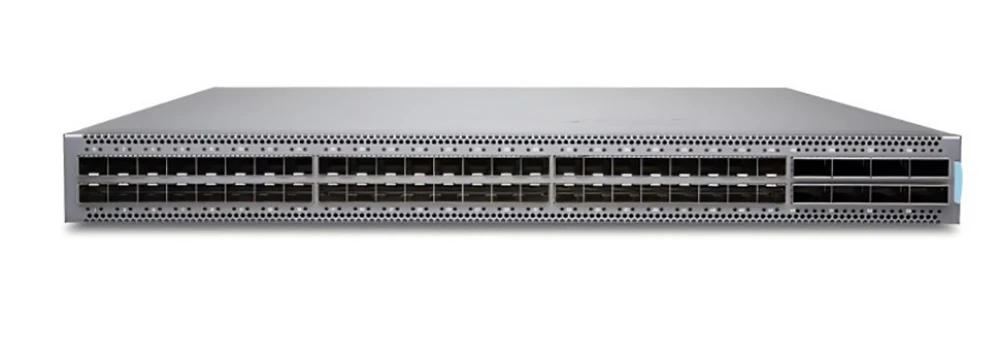
48 × 1/10/25GbE SFP28 Ports for High-Density Server Access
The QFX5120-48Y-AFO provides 48 SFP28 ports supporting 1GbE, 10GbE, and 25GbE connections, allowing enterprises to connect servers and network devices with different speed requirements.
The multi-speed capability allows the switch to adapt to different server connection requirements during data center upgrades.
8 × 40/100GbE QSFP28 Ports for High-Speed Uplinks
The switch is equipped with 8 QSFP28 ports for 40GbE and 100GbE uplinks. These uplinks handle traffic between different network layers and support leaf-spine deployments.
With 25GbE access and 100GbE uplinks, the QFX5120-48Y-AFO fits environments where servers generate large amounts of data traffic.
Built for EVPN-VXLAN, AI, and Cloud Data Centers
The QFX5120-48Y-AFO supports EVPN-VXLAN, VXLAN routing, and segment routing capabilities. Powered by Junos OS, the QFX5120-48Y-AFO enables unified management within Juniper network environments. It supports modern data center designs with features such as EVPN-VXLAN and automation capabilities for cloud, virtualization, and AI workloads.
Front-to-Back Airflow and Redundant Hardware for Reliable Operation
The QFX5120-48Y-AFO uses front-to-back airflow (AFO) to support hot-aisle cooling designs commonly used in modern data centers.
It also features hot-swappable fans and supports 550W AC/DC power supplies, making hardware maintenance easier in high-density data center environments.
Common Deployment Scenarios
AI and Machine Learning Clusters
AI applications require fast communication between computing resources. High-speed Ethernet connectivity helps support data exchange between servers and provides a more solid foundation for AI infrastructure.
The QFX5120-48Y-AFO’s combination of 25GbE access and 100GbE uplinks makes it suitable for environments where bandwidth and scalability are important considerations.
Cloud Data Centers
Cloud environments require flexible networks that can support changing workloads. A scalable switching architecture helps cloud providers and enterprises manage increasing numbers of applications and connected devices.
The QFX5120-48Y-AFO supports high-density connectivity and advanced networking features for cloud-oriented deployments.
Enterprise Campus Aggregation
Large enterprise networks often require powerful aggregation layers to connect multiple access networks.
With Layer 3 routing and high-speed interfaces, the QFX5120-48Y-AFO supports enterprise aggregation networks by providing flexible traffic control and efficient data forwarding.
High-Speed Storage Networks
As storage workloads increase, faster network connections are becoming more important for moving large amounts of data efficiently.
The QFX5120-48Y-AFO provides 25GbE connectivity that can support modern storage applications, including NVMe-oF and iSCSI environments.
Conclusion
As data center workloads continue to grow, higher-speed networking has become an important requirement. 25GbE switches with 100GbE uplinks provide faster server connections and greater capacity for data-intensive applications. With 48 SFP28 ports, 8 QSFP28 uplinks, EVPN-VXLAN support, and low-latency performance, the Juniper QFX5120-48Y-AFO is designed for modern data center environments. Looking for a high-performance data center switch for your network upgrade? Contact us to learn more about the Juniper QFX5120-48Y-AFO specifications, availability, and deployment options.
FAQ
Q: Why are enterprises upgrading from 10GbE to 25GbE switches?
A: Enterprises are upgrading to 25GbE switches because modern applications such as AI, cloud computing, and virtualization require higher network bandwidth and faster server connections.
Q: What is the benefit of 25GbE switches with 100GbE uplinks?
A: 25GbE access ports provide faster connections for servers, while 100GbE uplinks offer higher bandwidth between switches and help reduce network bottlenecks.
Q: What applications can the Juniper QFX5120-48Y-AFO support?
A: The Juniper QFX5120-48Y-AFO is suitable for cloud data centers, AI and HPC environments, enterprise aggregation networks, and high-speed storage applications.