Enterprise wireless networks are facing increasing pressure from growing device density, cloud-based applications, and bandwidth-intensive workloads such as 4K/8K video conferencing, real-time collaboration tools, and IoT-driven automation. For IT teams managing large campuses, hospitals, universities, or high-density public environments, the challenge is not only performance—but also stability, scalability, and zero downtime operation.
The Cisco C9800-40-K9 wireless controller is designed to meet these enterprise requirements. Built on Cisco IOS XE, this Wi-Fi 6-ready controller provides a modern architecture for managing large-scale wireless networks. It supports up to 2,000 access points and 32,000 concurrent clients, delivering up to 40 Gbps throughput for high-density enterprise environments.
This makes it a strong solution for organizations looking for a scalable enterprise wireless LAN controller that can support future network expansion while maintaining operational simplicity and security.
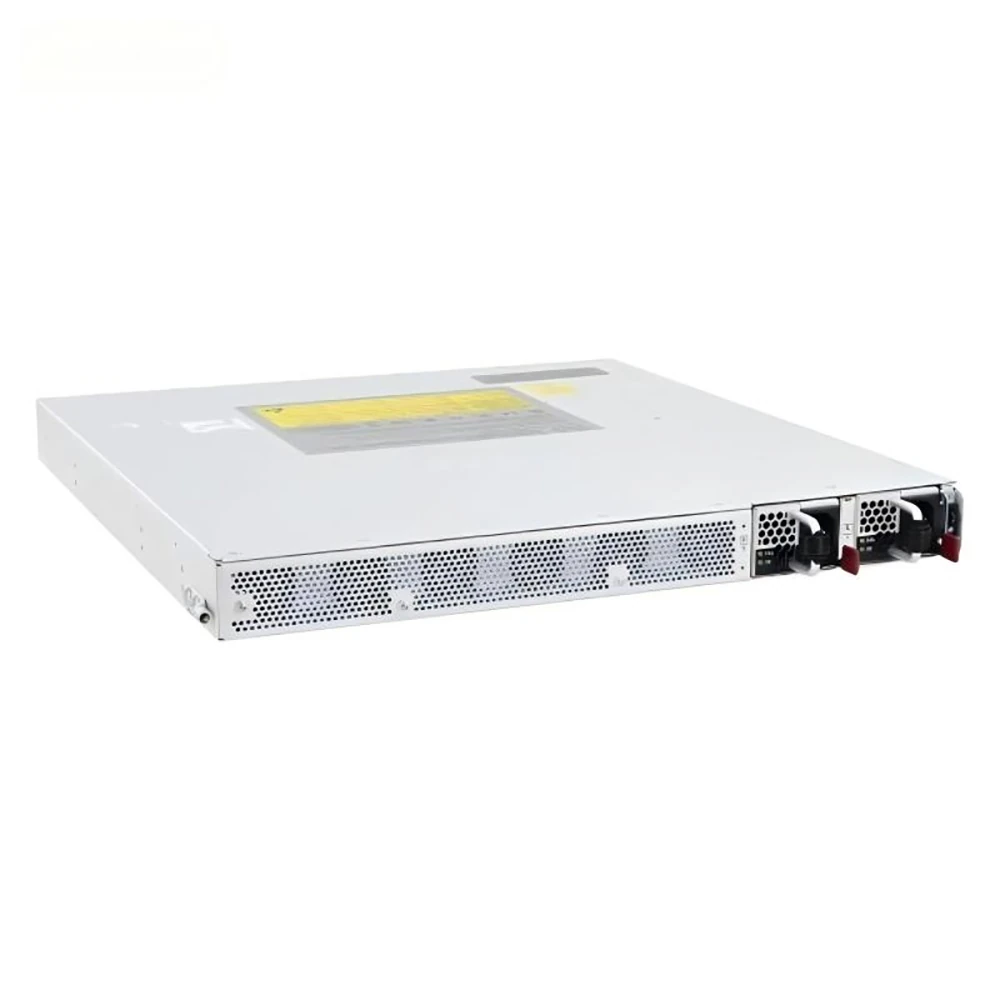
Product Overview
The Cisco C9800-40-K9 belongs to the Catalyst 9800 Series and is built for Wi-Fi 6 (802.11ax) deployments. Unlike older controllers that ran separate operating systems for wired and wireless, it runs on Cisco IOS XE. That means one system for both networks — simpler policy management and fewer operational headaches.
It fits medium to large enterprises that need centralized control, high availability, and strong security. You’ll often find it in high-density environments where seamless roaming and centralized policy matter most.
Hardware Highlights
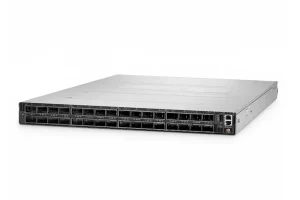
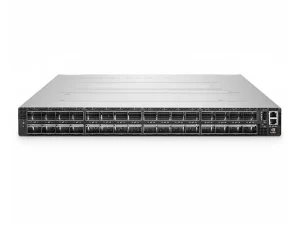
The Cisco C9800-40-K9 is designed in a compact 1RU rack-mountable form factor, making it suitable for standard data center racks and enterprise network rooms.
Key hardware features include:
- 1RU rack-mount design for enterprise and data center deployment
- Four 10G/1G SFP+ uplink ports for high-speed backbone connectivity
- Dedicated 1G management interface for network administration
- Dual AC power supplies with 1+1 redundancy for high availability
This hardware architecture ensures that the controller can operate in mission-critical environments where uptime and reliability are essential.
Key Features and Business Benefits
| Feature | Business Benefit |
| 40 Gbps aggregate throughput | Supports high-density enterprise WiFi networks, 4K/8K video, cloud applications |
| Scales to 2,000 APs and 32,000 clients | Ideal for large enterprise campus networks and headquarters deployments |
| Always-on resiliency (ISSU, SSO) | Prevents downtime in mission-critical wireless networks |
| Enterprise-grade security (WPA3, ETA, SD-Access) | Enhances enterprise wireless network security and zero-trust access control |
| Cisco IOS XE and DNA Center integration | Enables centralized enterprise network management and automation |
| Flexible deployment modes | Supports enterprise, branch, and distributed WiFi architectures |
| 1RU high-density form factor | Optimized for data center and enterprise rack deployment |
| Four 10G SFP+ uplink ports | Ensures high-speed backbone connectivity for enterprise WLAN controllers |
| Wi-Fi 6 (802.11ax) ready | Optimized for next-generation enterprise wireless access points |
| Programmability (open APIs, YANG) | Enables network automation and reduced operational costs (OPEX) |
The Cisco C9800-40-K9 is designed not only as a wireless controller, but as a complete enterprise WiFi management platform.
These capabilities make it a strong candidate for organizations seeking a scalable WiFi controller for enterprise networks with long-term investment protection.
Technical Specifications
| Parameter | Specification |
| Product model | C9800-40-K9 |
| Product type | Catalyst 9800 Series fixed wireless controller |
| Throughput | Up to 40 Gbps |
| Maximum access points | Up to 2,000 |
| Maximum concurrent clients | Up to 32,000 |
| Maximum WLANs / VLANs | 4,096 each |
| Network standards | IEEE 802.11a/b/g/n/ac/ax (Wi-Fi 6), WPA3 |
| Data ports | 4 × 10G/1G SFP+/SFP |
| Management ports | 1 × 10/100/1000BASE-T RJ-45 |
| Form factor | 1RU |
| Operating system | Cisco IOS XE |
| Licensing | Cisco Smart Licensing |
These specifications position the device as a high-performance enterprise wireless LAN controller suitable for modern digital organizations.
Deployment Models
The Cisco C9800-40-K9 supports multiple deployment architectures depending on enterprise requirements:
- Centralized deployment
All wireless traffic is tunneled to a central controller, typically located in a data center. This model is ideal for organizations requiring strict policy enforcement and centralized security control. - Cisco FlexConnect deployment
Used for distributed enterprises and branch offices, where local switching reduces WAN bandwidth usage while maintaining centralized management. - Fabric Wireless (SD-Access)
Fully integrated into Cisco SD-Access architecture, enabling automated segmentation, policy-based access, and zero-trust network design.
These deployment options make the C9800-40-K9 highly flexible for enterprise campus WiFi, branch networks, and hybrid cloud environments.
Ideal Application Scenarios
The Cisco C9800-40-K9 is widely deployed across multiple enterprise industries:
- Large enterprise campuses and headquarters
Supports thousands of users, IoT devices, and guests across multi-building environments. - Data center wireless backhaul
Provides reliable connectivity for IoT sensors, edge computing, and mobile devices. - Service provider and managed service networks
Enables scalable WiFi-as-a-service platforms for multiple customers. - High-density public venues
Designed for airports, stadiums, convention centers, and other environments with tens of thousands of concurrent users. - Healthcare and education environments
Supports mission-critical applications such as patient monitoring systems and digital learning platforms. - Retail and hospitality networks
Enables guest WiFi, POS systems, and IoT-based retail operations under a unified controller.
These scenarios demonstrate its strength as an enterprise-grade wireless controller for high-density environments.
Supported Accessories and Modules
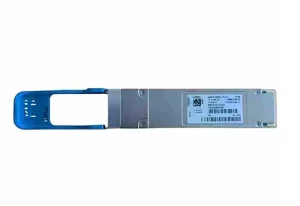
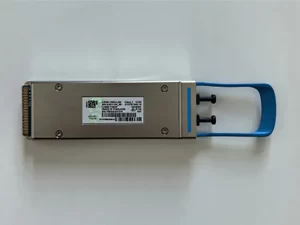
Transceiver modules
- 10GBASE-SR SFP+ – Up to 300m over OM3/OM4 MMF (SFP-10G-SR-S)
- 10GBASE-LR SFP+ – Up to 10km over SMF (SFP-10G-LR-S)
- 1GBASE-SX SFP – Up to 550m over MMF (GLC-SX-MMD)
- 1GBASE-LX/LH SFP – Up to 10km over SMF (GLC-LH-SMD)
Cabling and connectivity
- Duplex SMF/MMF patch cords with LC/LC or SC/LC connectors
- Cat6a or Cat7 Ethernet cables for management and redundancy
- Fiber optic cleaning kits
Rack and power accessories
- Standard 19-inch rack mount kits
- Spare redundant AC power supplies (C9800-40-PWR-AC)
- Region-specific AC power cords
These accessories ensure full compatibility and deployment flexibility in enterprise environments.
Frequently Asked Questions
What is Cisco C9800-40-K9 used for?
It is used as an enterprise wireless LAN controller for managing large-scale WiFi networks in campuses, data centers, and enterprise environments.
How many access points does it support?
It supports up to 2,000 access points and 32,000 clients simultaneously.
Is it suitable for large enterprise networks?
Yes, it is specifically designed for large enterprise WiFi infrastructure and high-density deployments.
What is the difference between C9800-40-K9 and C9800-80-K9?
The C9800-40-K9 supports up to 2,000 APs, while the C9800-80-K9 supports up to 6,000 APs and larger-scale deployments.
Conclusion
The Cisco C9800-40-K9 wireless controller is a strategic solution for enterprises that require scalable, secure, and high-performance WiFi infrastructure.
It delivers a balanced combination of performance, capacity, and operational efficiency, making it ideal for organizations transitioning to Wi-Fi 6 environments or upgrading legacy wireless APs and controllers. When integrated with Cisco DNA Center and Catalyst Wi-Fi 6 access points, it forms a future-ready enterprise wireless network architecture capable of supporting evolving digital transformation needs.