As bandwidth demands continue to grow across modern data centers and carrier networks, network architects face increasing pressure to deliver 100Gbps connectivity while maintaining high port density, low power consumption, and operational reliability. The Cisco CPAK-100G-LR4 100GBASE-LR4 optical transceiver module provides a proven solution for these requirements, enabling 10km transmission over standard single-mode fiber (SMF).
This article explains the key features, technical specifications, and main use cases of the CPAK-100G-LR4, helping network professionals understand its role in Metro Ethernet, data center interconnect, and enterprise backbone deployments.
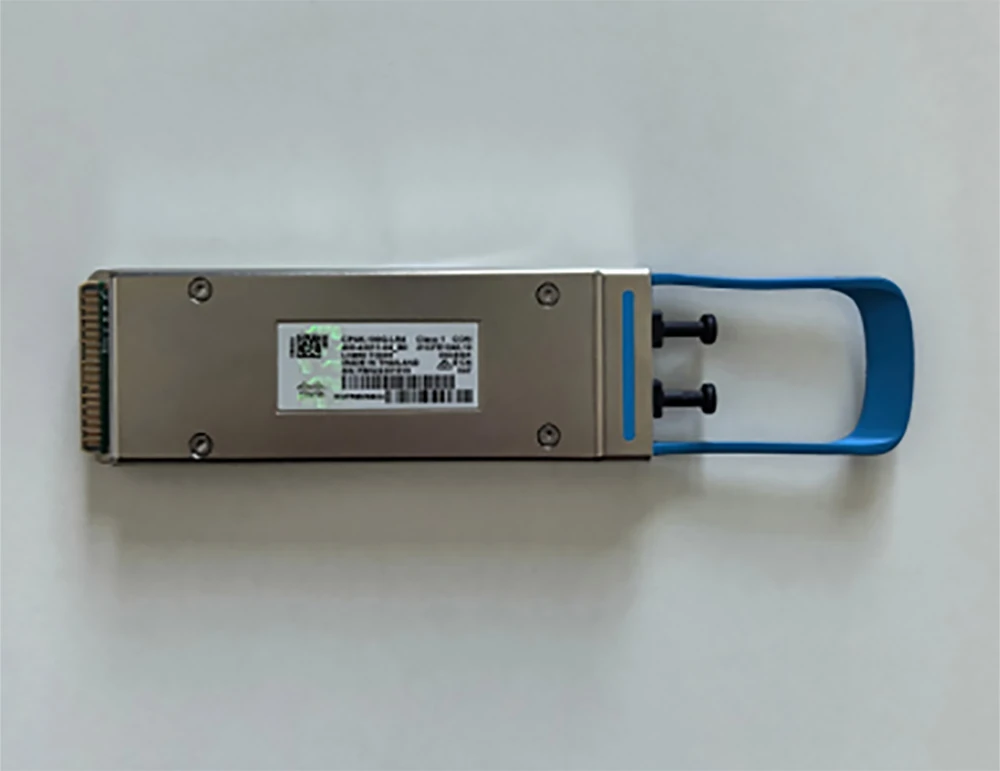
What Is Cisco CPAK-100G-LR4 100G Optical Module?
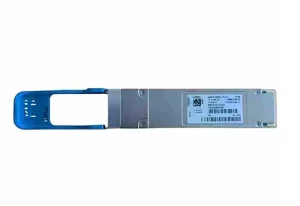
The Cisco CPAK-100G-LR4 optical module is a 100 Gigabit Ethernet optical transceiver module designed for long-distance connectivity over single-mode fiber. It is part of Cisco’s CPAK (Cisco Packet-Optical Platform) transceiver family, developed to support high-density 100Gbps applications in enterprise and service provider networks.
The module delivers 100Gbps aggregate throughput using 4-lane LAN Wavelength-Division Multiplexing (WDM) technology. It multiplexes four 25Gbps electrical lanes into a single duplex SMF pair, enabling efficient utilization of existing fiber infrastructure while achieving full 100Gbps performance.
The CPAK-100G-LR4 is fully compliant with IEEE 802.3ba standards, ensuring interoperability with Cisco and third-party 100GbE networking equipment.
Key Features of Cisco CPAK-100G-LR4 Optical Transceiver Module
100Gbps High-Speed Data Transmission
By aggregating four 25Gbps channels via LAN-WDM technology, the Cisco CPAK-100G-LR4 enables 100GbE connectivity with the stability and capacity required for high-performance data center and carrier networks.
10km Transmission over Single-Mode Fiber (SMF)
With a maximum reach of 10km over G.652 single-mode fiber, this module is an ideal solution for data center interconnect (DCI) and metro Ethernet networks requiring reliable long-distance connectivity.
LAN-WDM Multiplexing Technology
It aggregates four 25Gbps channels into a single duplex SMF pair, maximizing fiber utilization and reducing infrastructure cost.
IEEE 802.3ba Compliance
Fully compliant with the 100GBASE-LR4 standard, ensuring interoperability with Cisco and third-party 100GbE equipment.
Hot-Swappable Design
The module supports in-service installation and replacement without system downtime, improving maintenance efficiency and network availability.
Digital Optical Monitoring (DOM)
Provides real-time monitoring of optical parameters such as transmit/receive power, temperature, and voltage for proactive network management.
Low Power & High-Density Design
Consumes less than 5.5W typical power while delivering high port density, reducing cooling costs and improving data center efficiency.
Connector Flexibility (SC / LC Support)
Supports SC/PC connectors natively, with LC compatibility via removable adapter (v09+), enabling flexible integration with existing cabling systems.
Technical Specifications of CPAK-100G-LR4
| Parameter | Specification |
| Product Model | CPAK-100G-LR4 |
| Product Type | CPAK Optical Transceiver Module |
| Data Rate | 100GbE, 4 × 25Gbps lanes |
| Standard Compliance | IEEE 802.3ba (100GBASE-LR4) |
| Wavelength | 1310nm nominal (4 LAN-WDM wavelengths) |
| Fiber Type | Single-Mode Fiber (SMF), G.652 |
| Maximum Reach | 10 kilometers (6.2 miles) |
| Connector Type | SC/PC (official); LC via adapter (v09+) |
| Transmit Power | -4.3 dBm to 4.5 dBm |
| Receive Power | -10.6 dBm to 4.5 dBm |
| Power Consumption | <5.5W typical |
| Operating Temperature | 0°C to +70°C |
| Form Factor | Hot-swappable CPAK |
| Diagnostics | Digital Optical Monitoring (DOM) |
| Dimensions | 34.8 × 11.6 × 101.2 mm |
| Host Interface | CPAK electrical interface |
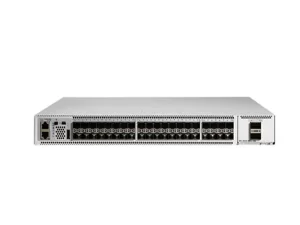
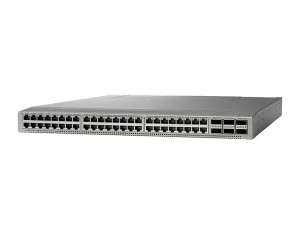
| Supported Platforms | Cisco Nexus 7000/7700, ASR 1000/9000, CRS-X, NCS 2000/4000/6000, ONS platforms |
100G Optical Module Use Cases in Metro Ethernet & Data Center Networks
Data Center Interconnect (DCI) Applications
The CPAK-100G-LR4 is widely used for connecting geographically separated data centers up to 10km apart. It enables workload mobility, disaster recovery, and distributed cloud architectures with high-bandwidth, low-latency connectivity.
Metro Ethernet Network Deployment
Service providers use the module to deliver 100Gbps services across metro fiber networks. It supports central office interconnection and high-capacity service delivery for enterprise and residential customers.
Enterprise Campus Backbone Networks
Large enterprise campuses deploy CPAK-100G-LR4 modules to connect multiple buildings and distribution frames, ensuring stable high-speed connectivity for bandwidth-intensive applications.
Carrier-Grade Optical Transport Networks
This module can be integrated into optical transport systems such as the Cisco NCS 2000 series, providing high-speed client interfaces for metro and long-haul DWDM networks.
High-Density Data Center Switching Environments
In top-of-rack (ToR) and end-of-row (EoR) architectures, the CPAK form factor provides high port density and reduced power consumption. It delivers up to 20% higher port density and 40% lower power consumption compared to CFP2 modules.
Why Choose Cisco CPAK-100G-LR4 Over Other 100G Optical Modules
CPAK vs CFP/CFP2 Modules
Compared to CFP and CFP2 form factors, CPAK-100G-LR4 offers higher efficiency and density. It supports up to 20% more port density than CFP2 modules, enabling more 100G interfaces per chassis.
It also consumes less than 5.5W typical power, resulting in up to 40% lower power usage than CFP2 and up to 70% lower than CFP modules. This significantly reduces cooling requirements and operational costs.
CPAK vs QSFP28 Modules
While QSFP28 is widely used in newer deployments, CPAK-100G-LR4 remains relevant in Cisco infrastructures already using CPAK interfaces. It is commonly deployed in Nexus 7000/7700, ASR 9000, and CRS-X platforms.
It provides a cost-effective upgrade path to 100G without requiring full hardware replacement and supports flexible integration with existing cabling systems.
Supported Accessories and Related Modules
Recommended fiber includes duplex single-mode G.652 SMF patch cords with SC/PC connectors. LC connectors are supported via adapter on v09+ modules. Fiber cleaning kits are recommended for optimal performance.
Related modules include CPAK-100G-LR4-2K, CPAK-100GE-LR4, CPAK-100G-SR4, and CPAK-100G-CWDM4 for different reach and fiber types.
Installation and Maintenance
The CPAK-100G-LR4 supports hot-swappable operation, allowing installation or replacement without system shutdown. This reduces downtime and improves maintenance efficiency.
Digital Optical Monitoring (DOM) enables real-time tracking of optical power, temperature, voltage, and laser bias current, helping operators detect issues early and maintain stable network performance.
Frequently Asked Questions (FAQ)
What is the maximum distance of CPAK-100G-LR4?
It supports up to 10 kilometers over G.652 single-mode fiber.
Is CPAK-100G-LR4 compatible with LC connectors?
Yes. v09+ versions support LC connectors via removable adapter.
What fiber type is required?
Single-Mode Fiber (SMF), G.652 standard.
Conclusion
The Cisco CPAK-100G-LR4 is a reliable 100G optical transceiver module designed for metro Ethernet, data center interconnect, and enterprise backbone networks. It provides 10km transmission over single-mode fiber with low power consumption, high port density, and strong interoperability.
Its LAN-WDM technology, hot-swappable design, and DOM monitoring capabilities make it a practical and efficient solution for modern high-capacity networks. For Cisco environments with CPAK support, it remains a cost-effective and stable upgrade path to 100Gbps connectivity. If you are interested in this product, please feel free to contact us for more information and a quote.